
Russell’s Reserve is expanding its celebrated bourbon portfolio with a distinctive new release that brings unexpected spice and complexity to the forefront. The Kentucky whiskey brand has introduced Camp Nelson D, the fifth expression in its Single Rickhouse Collection, an annual series exploring how warehouse conditions influence the character of aged bourbon.
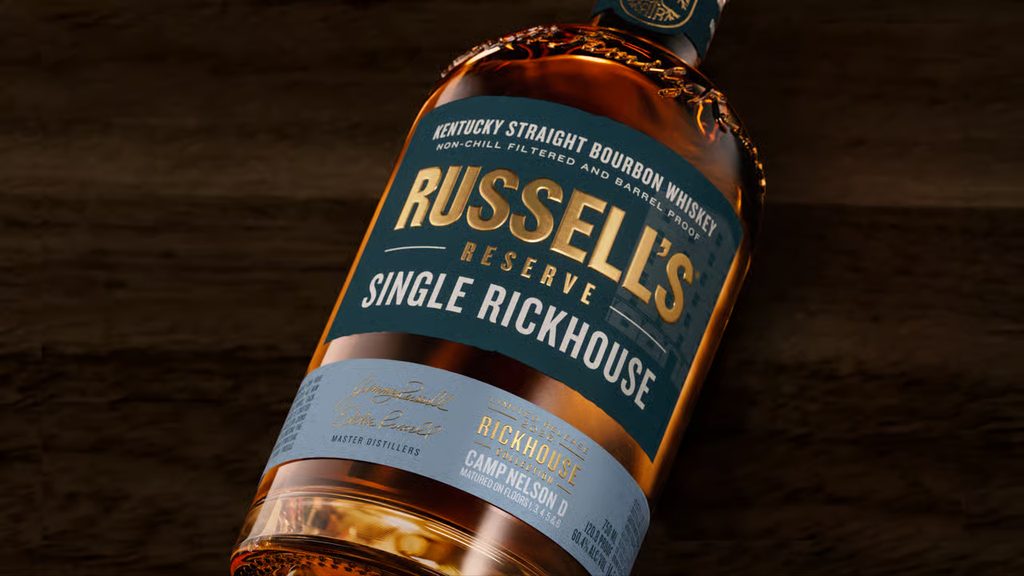
Released on October 9, 2026, the limited-edition bottling highlights the relationship between environment and flavor, demonstrating how elevation, airflow, and barrel placement can produce remarkably different results even when the whiskey begins with the same mash bill and distillation process.
For this year’s expression, Russell’s Reserve turns its attention to Camp Nelson D, a historic rickhouse built in 1946. Located on the western edge of the distillery’s property, the warehouse occupies the highest elevation of any Kentucky rickhouse featured in the collection so far. Its exposed position and constant air currents create distinctive aging conditions that contribute to the bourbon’s unusually pronounced spice profile.
The result is a whiskey that, according to the brand, delivers the most surprising flavor experience in the collection to date. While bourbon enthusiasts often expect familiar notes of caramel, vanilla, and oak, Camp Nelson D distinguishes itself with a rye-like intensity that adds another dimension to its character.
For Master Distiller Eddie Russell, the release carries a personal significance that extends beyond its flavor profile. Russell, who celebrates 45 years with Wild Turkey Distilling Co. in 2026, began his career as a union employee working in Camp Nelson D.
“Camp Nelson D was the first rickhouse I ever worked in when I started as a union employee 45 years ago, so coming back to it for this release meant a lot,” Russell said in the launch announcement. He also explained that the team initially sought the sweeter notes associated with the brand but quickly noticed the pronounced rye spice. Tasted blind, he suggested, the whiskey could easily be mistaken for a rye.
That unexpected character makes the release particularly interesting for collectors and drinkers who appreciate the influence of maturation on a spirit’s final profile. Rather than relying on a different recipe, the Single Rickhouse Collection examines how the same foundational whiskey can develop distinctive characteristics under varying environmental conditions.
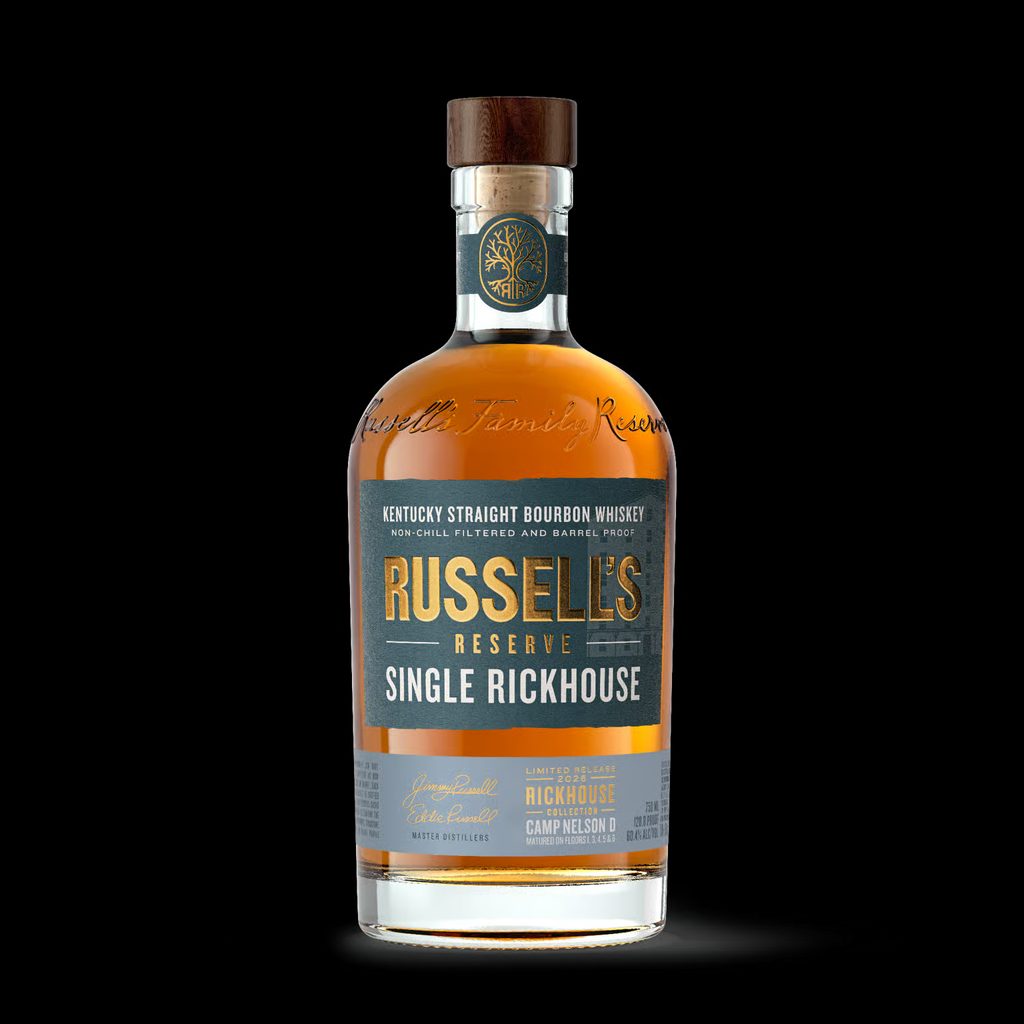
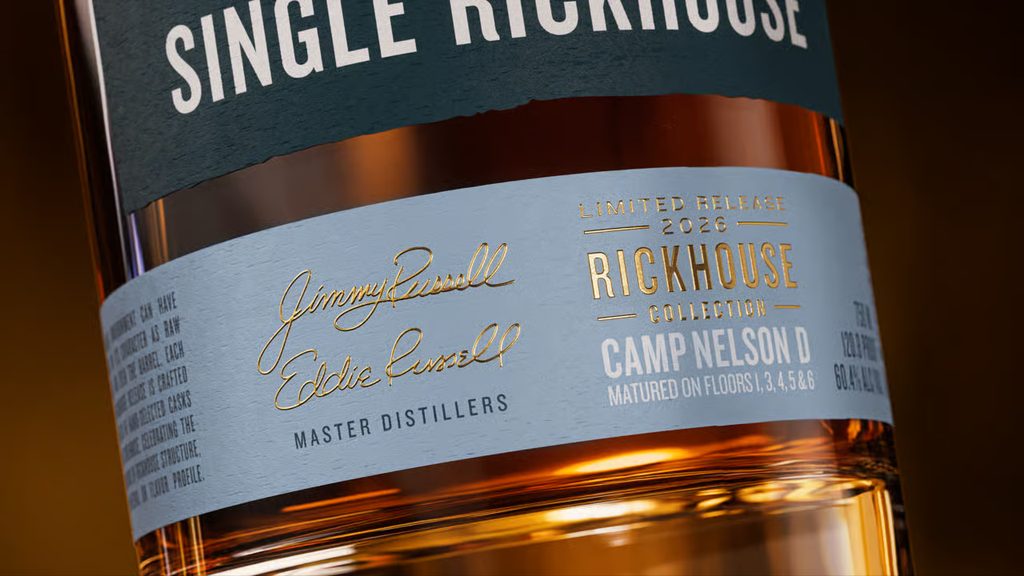
The blending process for Camp Nelson D also reflects a departure from conventional practice. Russell and his team selected barrels from the first, third, fourth, fifth, and sixth floors of the warehouse. This approach brought together whiskey matured at different elevations, allowing the team to balance contrasting flavor characteristics.
Barrels from the lower floor contributed earthy undertones, while those from higher levels introduced fruit-forward sweetness. According to Russell’s Reserve, combining these elements created a more complex and balanced final expression. The decision to draw from multiple floors illustrates how barrel location can become an important variable in shaping a finished bourbon.
The technical specifications further reinforce the release’s robust character. Camp Nelson D is non-chill filtered and bottled at 120.8 proof, delivering a full-strength presentation intended to preserve the whiskey’s depth and texture.
On the nose, the bourbon opens with aromas of baked apples, vanilla, and warm baking spices. The palate develops with layered notes of stone fruit, clove, cinnamon, and crusty rye bread, creating a combination of sweetness, warmth, and savory spice. The finish lingers with black pepper and charred oak, leaving a bold impression that distinguishes the release from more traditionally sweet-forward bourbons.
The interplay between fruit, baking spices, and pepper gives Camp Nelson D a profile that appears to draw as much from its maturation environment as from the whiskey’s underlying recipe. Its rye-like character is particularly notable because the release remains a bourbon, illustrating how aging conditions can influence the flavors perceived in the glass.
Since its introduction, the Single Rickhouse Collection has focused on the idea of warehouse terroir: the concept that a spirit’s environment can shape its identity. In wine, terroir traditionally refers to the environmental factors influencing grapes and the resulting wine. Russell’s Reserve applies a related principle to bourbon, examining how a rickhouse’s location, structure, and internal conditions contribute to maturation.
Each installment offers a different perspective on the process, giving enthusiasts an opportunity to compare expressions that share a production foundation but develop distinct personalities. Camp Nelson D continues that exploration with a release defined by its elevated aging location and unusually assertive spice.
Russell’s Reserve Single Rickhouse 2026 is available at select retailers across the United States and at the Wild Turkey Distillery Visitor Center. The suggested retail price is $300 per bottle, placing it firmly in the premium limited-edition bourbon category.
For collectors, the release offers another chapter in a series built around the nuances of maturation. For bourbon drinkers, its combination of baked fruit, warm spices, rye-like intensity, and charred oak presents a compelling alternative to sweeter, more conventional profiles.
With Camp Nelson D, Russell’s Reserve demonstrates that a bourbon’s identity is shaped by more than its ingredients and distillation. Sometimes, the warehouse itself makes all the difference.


