
A New Vision of Luxury in the Desert
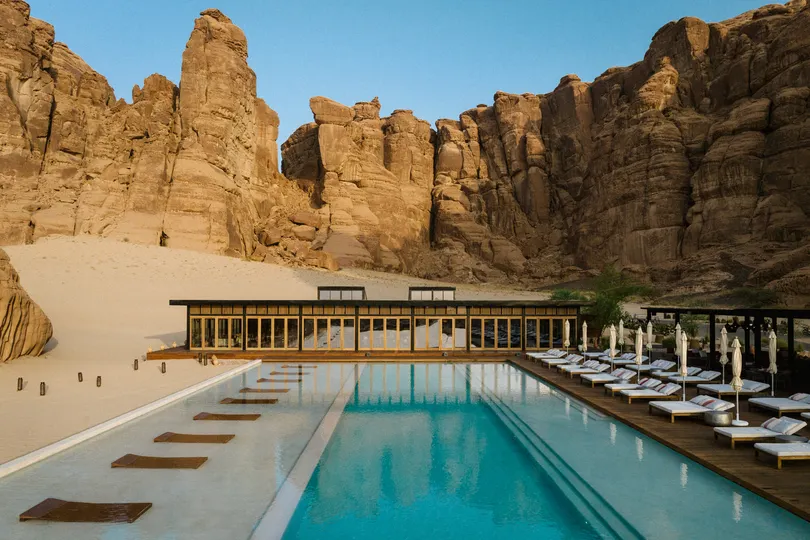
Set within the extraordinary sandstone landscapes of AlUla, northwestern Saudi Arabia, Our Habitas AlUla offers a distinctive interpretation of contemporary luxury. Rather than relying on monumental buildings or elaborate decoration, the resort embraces a quieter architectural language shaped by the surrounding desert, natural materials, and a strong connection to place. Its design philosophy transforms the landscape into the principal attraction, allowing architecture, art, and wellness to coexist within an environment of remarkable geological beauty.
Surrounded by towering sandstone formations, ancient rock faces, and expansive desert horizons, the resort creates an atmosphere that feels both remote and immersive. The experience is defined by simplicity, openness, and a deliberate reduction of visual distractions. Here, luxury is less about excess than about privacy, sensory experience, and the opportunity to reconnect with nature.
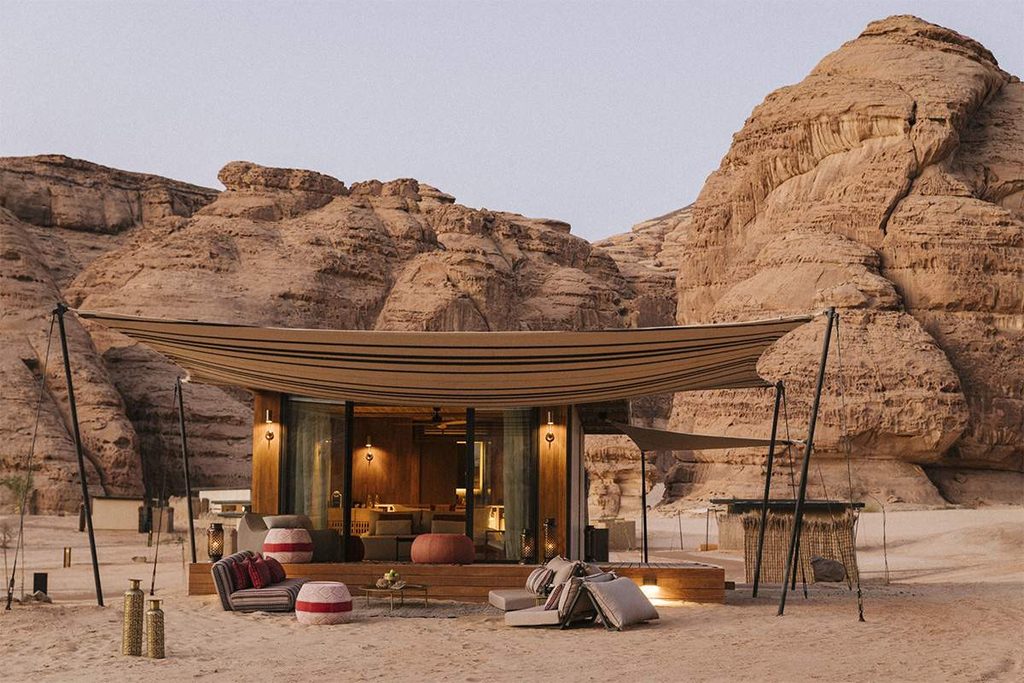
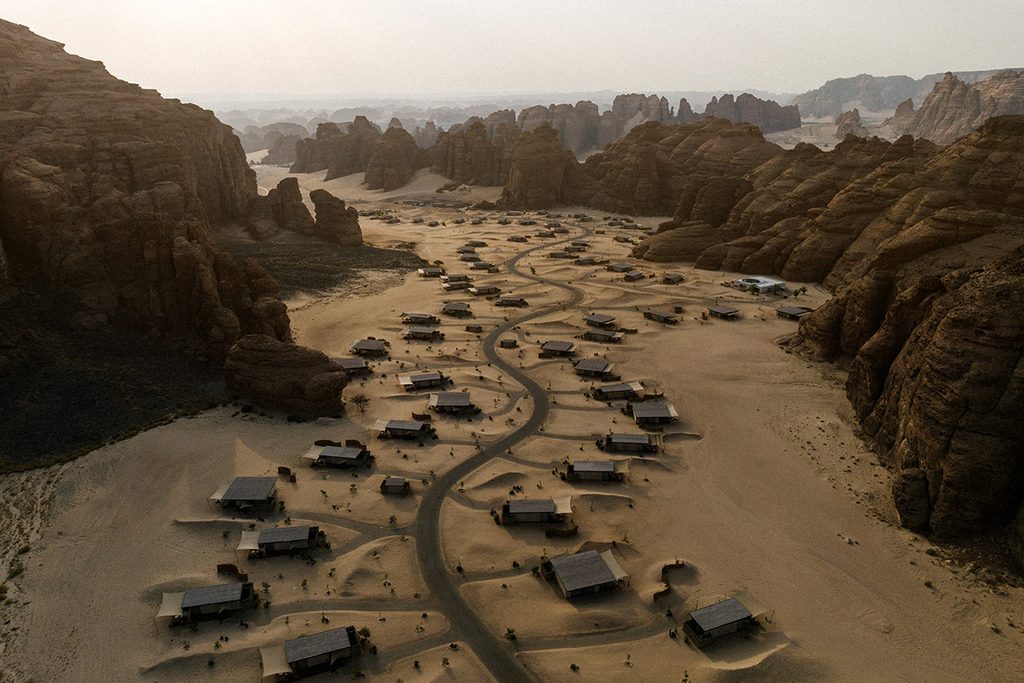
The architectural identity of Our Habitas AlUla is rooted in the relationship between built structures and their desert surroundings. Instead of imposing a single monumental complex upon the terrain, the resort is organized around individual villas distributed across the landscape. This low-impact approach allows the natural rock formations to remain central to the visual experience while providing guests with a sense of seclusion.
The architecture adopts a contemporary, understated aesthetic that contrasts with the ancient geological formations without competing with them. Clean lines, restrained forms, and natural-looking finishes establish a dialogue between modern design and the rugged character of the environment. The result is an architectural language that feels intentionally quiet, allowing the scale and texture of the landscape to dominate.
The sandstone formations function almost as natural architectural elements. Their sculptural shapes, warm colors, and dramatic shadows provide a visual framework for the resort. As sunlight moves across the desert, the surrounding rocks change in appearance, introducing a constantly shifting dimension to the experience of the buildings.
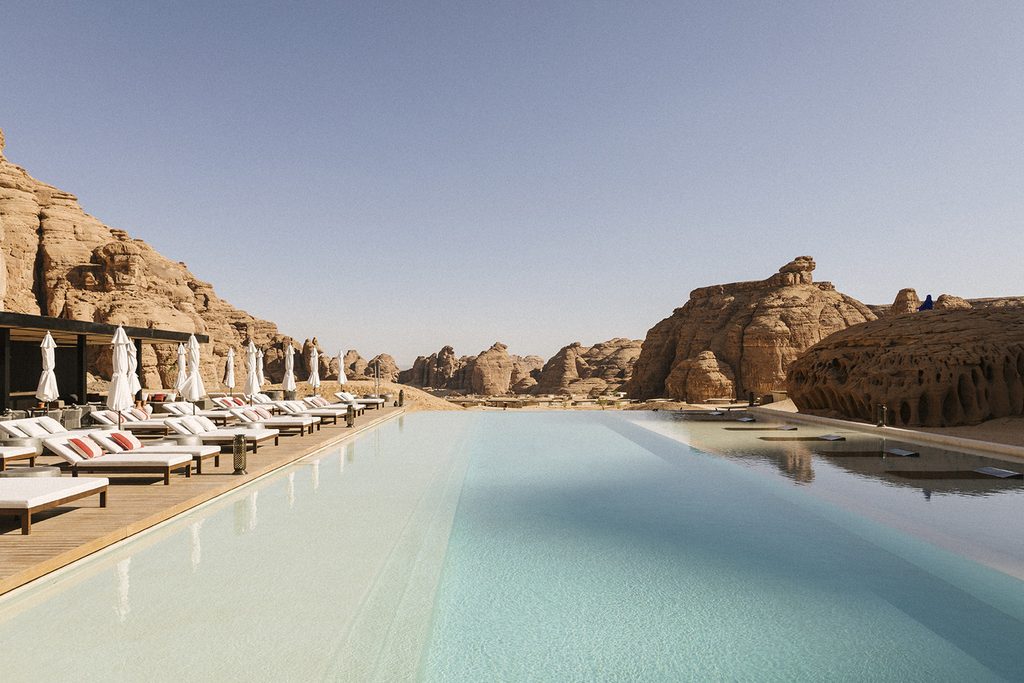
This approach reflects an important principle in contemporary hospitality design: architecture can become more powerful when it responds to its surroundings rather than attempting to overpower them.
Our Habitas AlUla features 96 sustainably designed villas that prioritize privacy, comfort, and a close connection with the outdoors. Their placement throughout the landscape creates a sense of distance between individual accommodations, allowing guests to experience the desert without feeling enclosed within a conventional hotel environment.
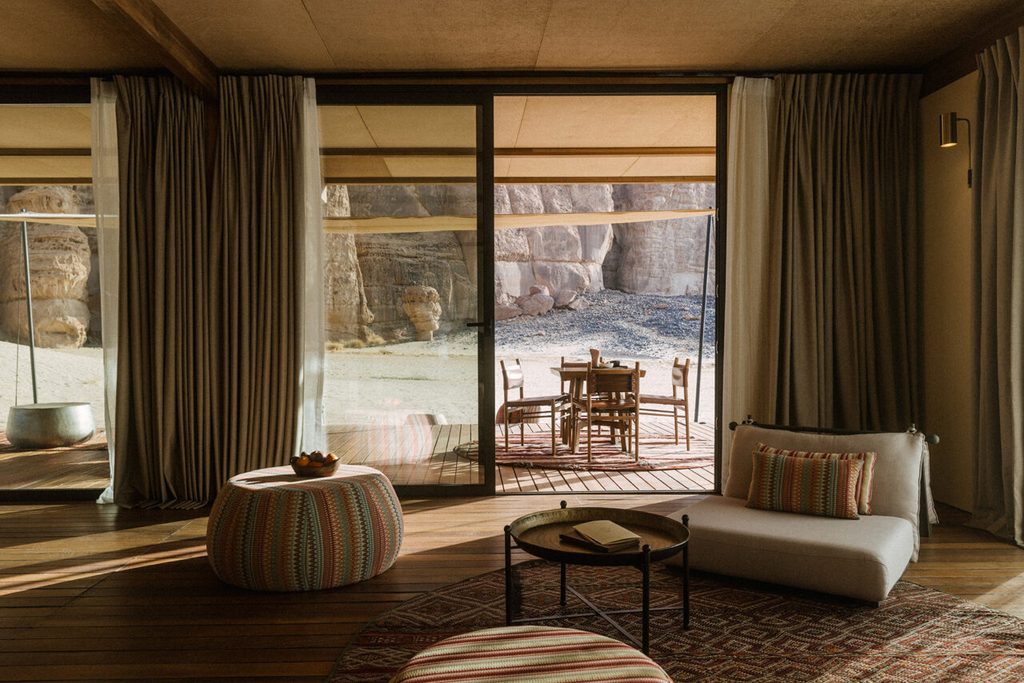
The interiors balance minimalism with tactile warmth. Luxurious linens, floor-level sofas, and traditional rugs made from ethically sourced organic materials contribute to an atmosphere that feels relaxed rather than formal. These elements introduce texture and softness into otherwise restrained spaces, demonstrating how a limited material palette can still create visual richness.
Furniture is selected to support comfort and informal living. Low seating encourages a grounded relationship with the interior, while rugs and textiles establish intimate zones within the villas. Instead of filling rooms with decorative objects, the design allows carefully chosen furnishings and materials to provide character.
The surrounding landscape remains an essential part of each accommodation. Views of the sandstone formations connect the interiors to the wider environment, while the restrained design prevents the rooms from competing with the scenery. This relationship between shelter and landscape is central to the resort’s appeal: the villas provide comfort while preserving a sense of immersion in the natural world.
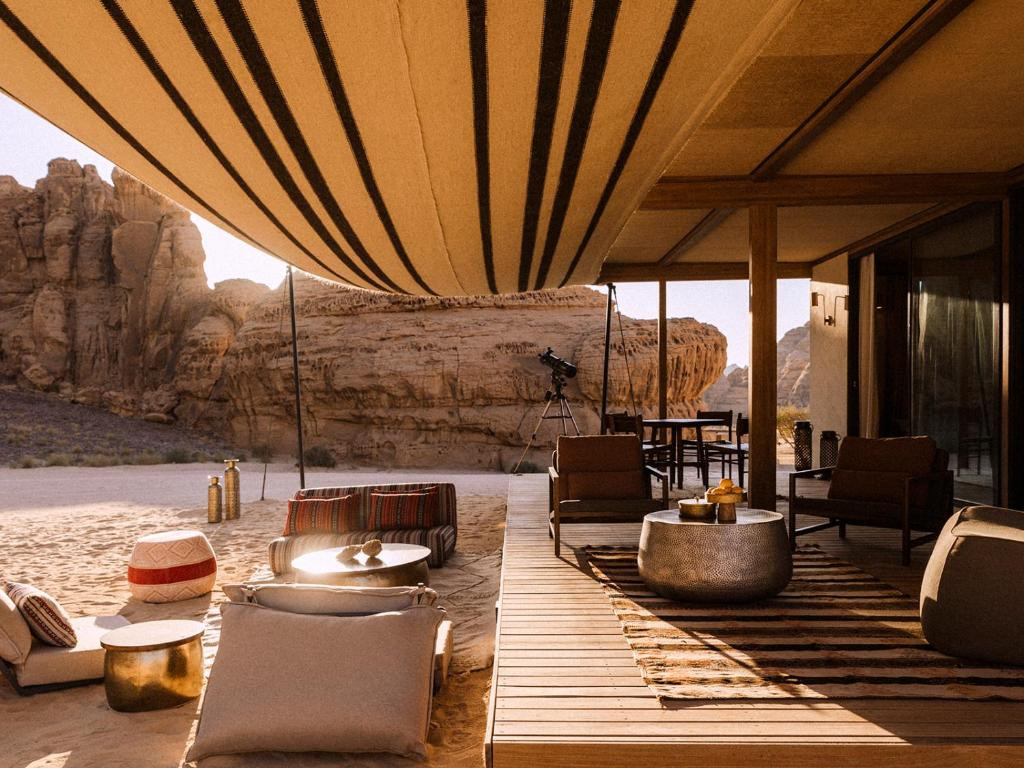
In desert architecture, light is one of the most influential design elements. The intense Saudi sunlight creates strong contrasts between illuminated surfaces and deep shadows, emphasizing the geometry of buildings and the sculptural qualities of the surrounding rocks.
At Our Habitas AlUla, the restrained architectural palette complements these natural conditions. Earthy tones and tactile finishes establish visual continuity with the landscape, while the contrast between solid forms and open views reinforces the sense of space.
The experience changes throughout the day. Morning light reveals subtle variations in the sandstone, while the warmer tones of late afternoon transform the surroundings into a dramatic composition of ochre, amber, and deep brown. After sunset, the darkness of the desert introduces another atmosphere altogether, encouraging attention to the night sky and the quiet of the environment.
This sensitivity to changing light contributes to the resort’s distinctive identity. Rather than depending exclusively on elaborate interiors, the design uses the natural environment as a constantly evolving source of beauty.
One of the resort’s defining characteristics is its integration of art and cultural programming into the architectural experience. Its association with the wider creative landscape of AlUla, including the Desert X AlUla programme, reflects an approach in which contemporary artistic expression interacts with the desert environment.
Art installations introduce unexpected forms and perspectives into the landscape, encouraging visitors to engage with their surroundings in new ways. Rather than treating art as an isolated decorative feature, this approach allows creative interventions to become part of the experience of moving through the desert.
The resort also incorporates spaces for open-air cinema, communal activities, and wellness experiences. Sound healing, meditation, and yoga take place in settings that emphasize the relationship between physical wellbeing and the natural environment. A sculptural yoga deck, framed by sandstone outcroppings, exemplifies this philosophy: the architecture provides a setting for contemplation without distracting from the landscape itself.
Mobility within the property also reinforces its experiential character. Guests are provided with bicycles for travelling between their villas, restaurant, spa, and communal spaces, with golf carts available as an alternative. This encourages a more active engagement with the surroundings and gives everyday movement a greater sense of connection to place.
Sustainability at Our Habitas AlUla is closely associated with a design philosophy that seeks to balance hospitality with environmental awareness. The resort’s distributed villas and emphasis on the surrounding landscape support an experience in which nature remains central rather than becoming a backdrop to an oversized architectural development.
Its use of ethically sourced organic materials in the interiors also reflects a preference for considered material choices. Nevertheless, the presence of sustainable materials alone does not establish the full environmental performance of a resort; factors such as water consumption, energy use, construction methods, and ecosystem protection are equally important when assessing its overall impact.
What is clear from its design approach is a commitment to a more experience-led form of luxury. Privacy, understated comfort, cultural engagement, and opportunities for reflection become as important as conventional markers of exclusivity.
The resort’s setting gives its architecture an additional cultural dimension. AlUla is home to archaeological sites, historic settlements, and remarkable evidence of civilizations that flourished along ancient trade routes. Nearby Hegra, Saudi Arabia’s first UNESCO World Heritage Site, is particularly significant for its monumental Nabataean tombs carved into sandstone.
This historical context creates an intriguing relationship between contemporary hospitality and the region’s architectural heritage. The resort’s modern structures are visually distinct from the ancient monuments, yet both demonstrate how architecture responds to landscape, climate, and the human need to inhabit challenging environments.
For visitors, the experience extends beyond accommodation. Exploring archaeological sites, discovering local cultural traditions, and returning to the quiet of the resort creates a connection between contemporary design and the deeper history of the region.
Our Habitas AlUla represents a form of luxury in which architecture, interior design, art, and landscape operate as interconnected elements. Its restrained villas, tactile interiors, and carefully integrated communal spaces create a setting that feels contemporary without losing sight of its extraordinary location.
Ultimately, the resort’s appeal lies in the balance between sophistication and simplicity. It offers comfort without excessive formality, artistic expression without overwhelming the landscape, and contemporary architecture within a setting shaped over millions of years.
In a destination where the sandstone formations are the most compelling architectural presence, the resort succeeds by allowing nature to lead. Its design offers a thoughtful interpretation of desert hospitality, demonstrating that the most memorable luxury experiences may emerge not from adding more, but from creating the space to see, feel, and appreciate what is already there.


