
A Landmark Reimagined in the Heart of Boston.
Overlooking the leafy pathways of Boston Public Garden, The Newbury Boston offers a sophisticated interpretation of luxury hospitality, bringing together historic architecture, contemporary interiors, and an unmistakable sense of New England elegance. Situated at the corner of Newbury and Arlington streets, the hotel occupies one of the city’s most distinguished locations, where nineteenth-century brownstones, landscaped public spaces, and fashionable shopping avenues create an atmosphere of timeless urban refinement.
Originally opened in 1927 as the first Ritz-Carlton hotel, the building has experienced several transformations throughout its history. Following an extensive renovation, it reopened as The Newbury Boston in May 2021, introducing a new design identity while preserving the architectural character of its historic structure. The result is a hotel that feels both rooted in the past and attuned to contemporary expectations, offering an experience shaped by art, material sophistication, and residential comfort.
The architectural significance of The Newbury Boston lies in its ability to maintain the grandeur of an established city landmark while accommodating the requirements of modern hospitality. Its historic exterior contributes to the architectural continuity of Back Bay, a neighborhood celebrated for its elegant streetscapes and distinctive nineteenth-century urban fabric.
Rather than treating the building’s history as a decorative theme, the hotel’s transformation places renewed emphasis on its original identity. The extensive renovation undertaken between 2019 and 2021 revitalized the shared guest spaces, introduced additional rooms and suites, and restored the historic ballrooms. These interventions allowed the property to evolve without abandoning the architectural heritage that distinguishes it from newer luxury developments.
The building’s vertical organization also contributes to its character. Guest accommodations occupy floors eight through sixteen, while the rooftop restaurant Contessa crowns the property on the seventeenth floor. This arrangement creates a progression from the more public, socially oriented spaces below to quieter residential-style rooms above.
The hotel’s position overlooking Boston Public Garden is equally important. The park’s mature trees, landscaped pathways, and seasonal colors provide a natural counterpoint to the city’s architectural density. From the upper floors, the views establish a visual relationship between the historic building and its surroundings, reinforcing the impression that the hotel belongs intrinsically to its neighborhood.
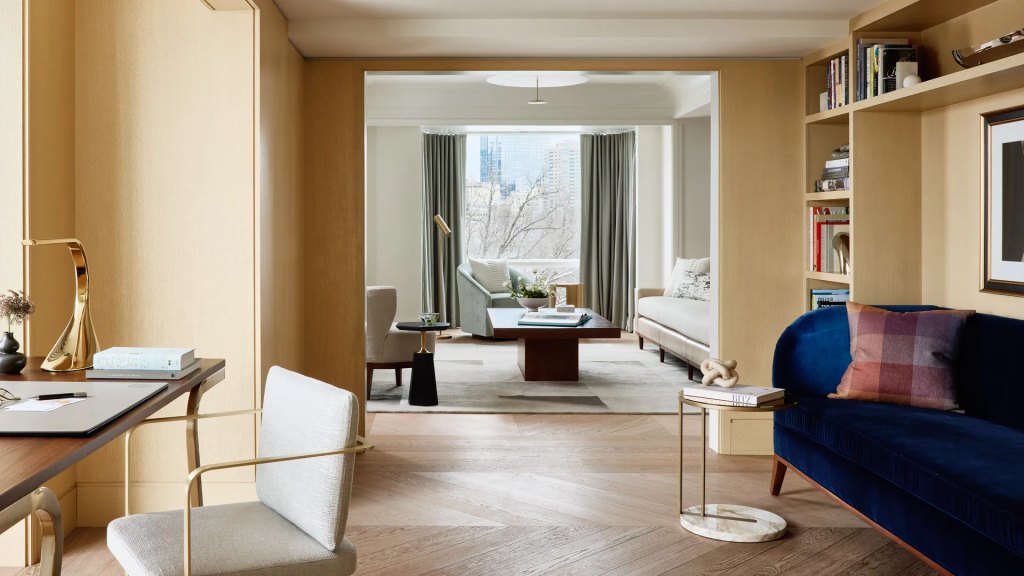
The interior design of The Newbury Boston moves away from the conventional formality often associated with grand historic hotels. Instead, it embraces a more intimate, residential atmosphere, combining refined finishes with carefully curated artwork, comfortable furnishings, and a sense of cultivated informality.
The result is an environment that feels luxurious without appearing excessively ceremonial. Public spaces invite guests to linger rather than simply pass through, while decorative details introduce personality and visual interest.
Art plays a central role in this identity. Curated collections throughout the property celebrate influential American cultural figures and contemporary artistic expression. References to writers and artists, including Ernest Hemingway, establish connections with literary history, while works by Elise Ansel contribute a distinctive visual presence.
This approach transforms the interiors into more than an exercise in decoration. Artwork functions as an integral part of the hotel’s atmosphere, encouraging exploration and giving different spaces their own character. The carefully arranged pieces, books, and decorative objects create layers of visual interest that reward closer attention.
The overall aesthetic depends on balance. Historic architectural elements provide a sense of permanence, while contemporary furnishings and carefully selected artwork prevent the interiors from feeling nostalgic. The combination produces an understated elegance that is sophisticated yet approachable.
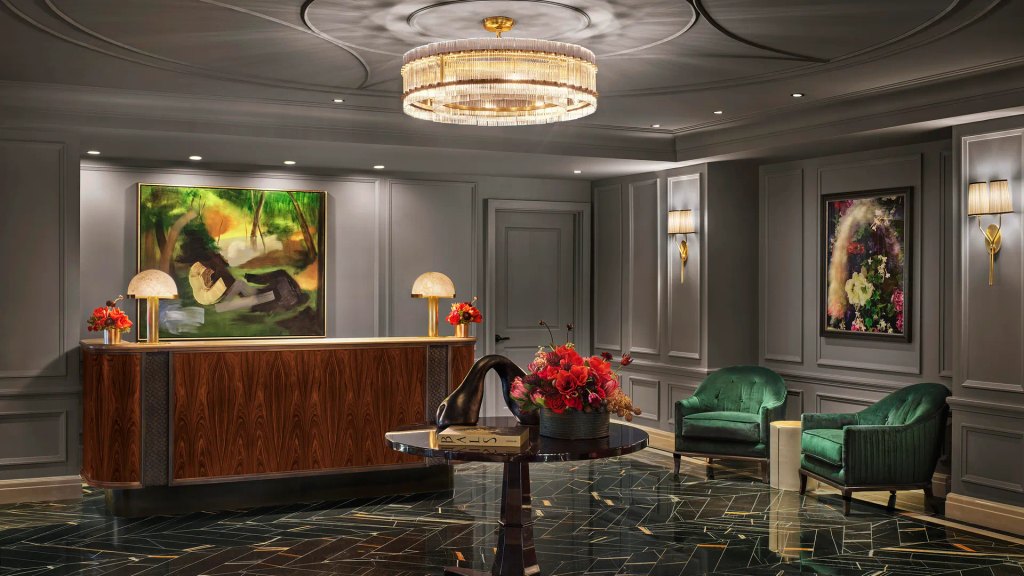
The ground-floor spaces establish the hotel’s identity from the moment guests arrive. The lobby combines the scale expected of a historic luxury property with a more intimate approach to hospitality, creating a welcoming transition between the busy streets of Boston and the quieter world within.
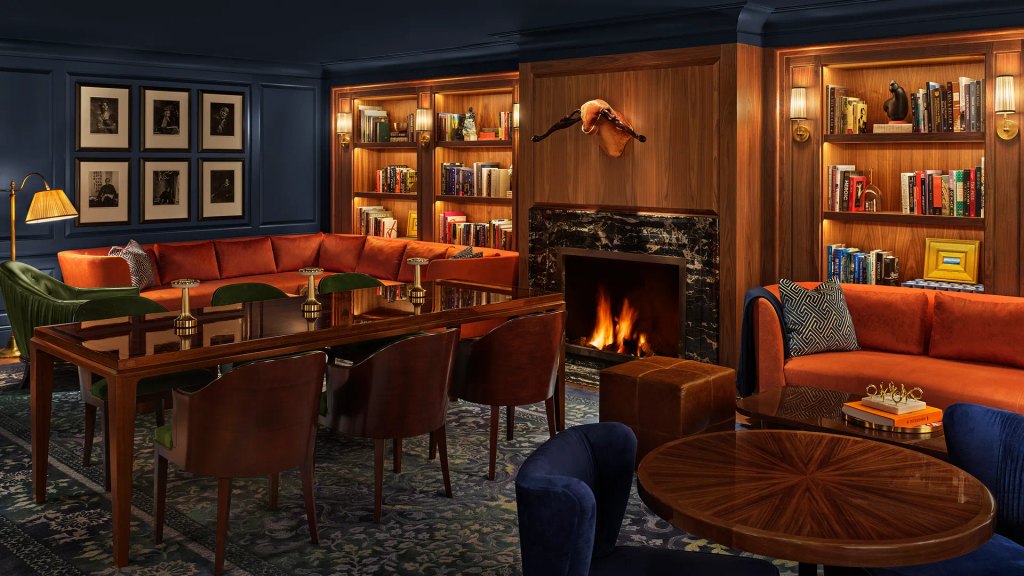
Street Bar extends this atmosphere through a setting designed for both social interaction and relaxed conversation. Curated artworks, bookshelves, and comfortable lounge seating give the space the character of a private club rather than a conventional hotel bar.
One of its most distinctive features is the tucked-away library, a richly detailed room lined with books spanning literature, theatre, and other subjects. Its collection, which includes works by Tennessee Williams and nonfiction about the New England Patriots, reflects the hotel’s connection to both cultural life and local identity.
The library introduces an important dimension to the interior design: the idea that luxury can be expressed through atmosphere and intellectual character as much as through expensive materials. It offers a quieter alternative to the public-facing bar, creating a space where guests can retreat, read, or enjoy a more private conversation.
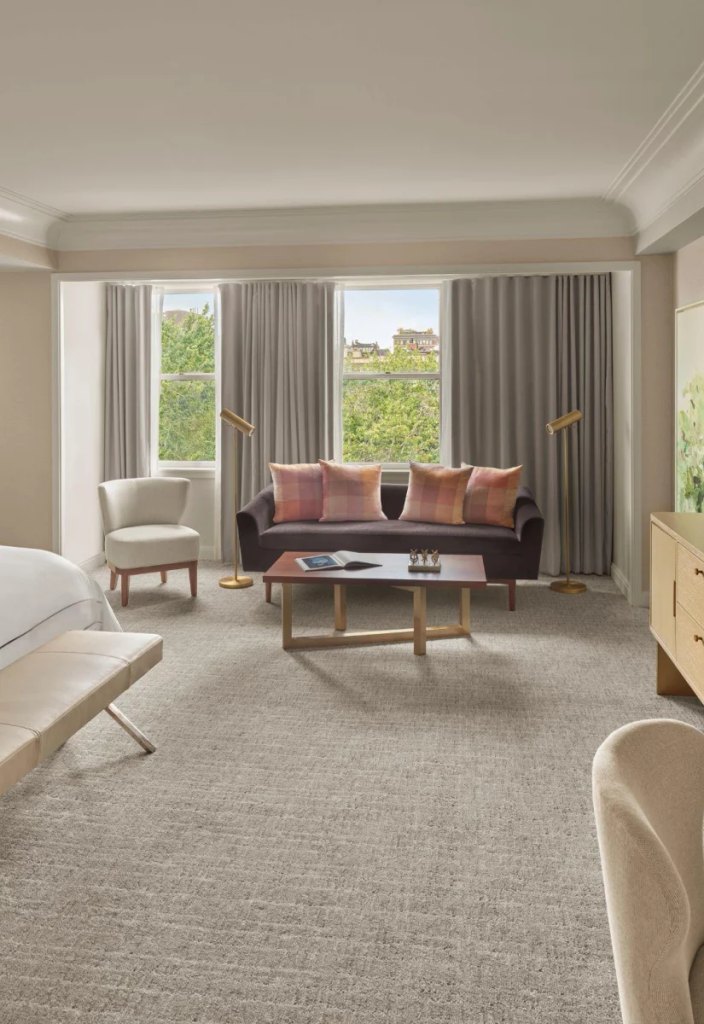
The Newbury Boston contains 286 rooms, including 90 suites, designed around a generous sense of space and residential comfort. Even the standard accommodations are notably spacious for a central Boston location, with the original review reporting a minimum area of approximately 500 square feet.
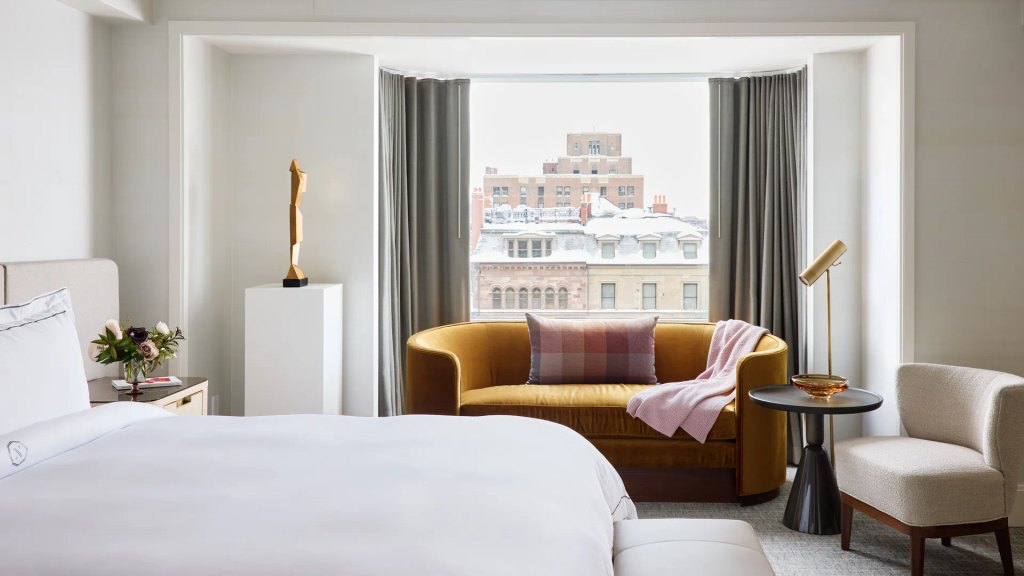
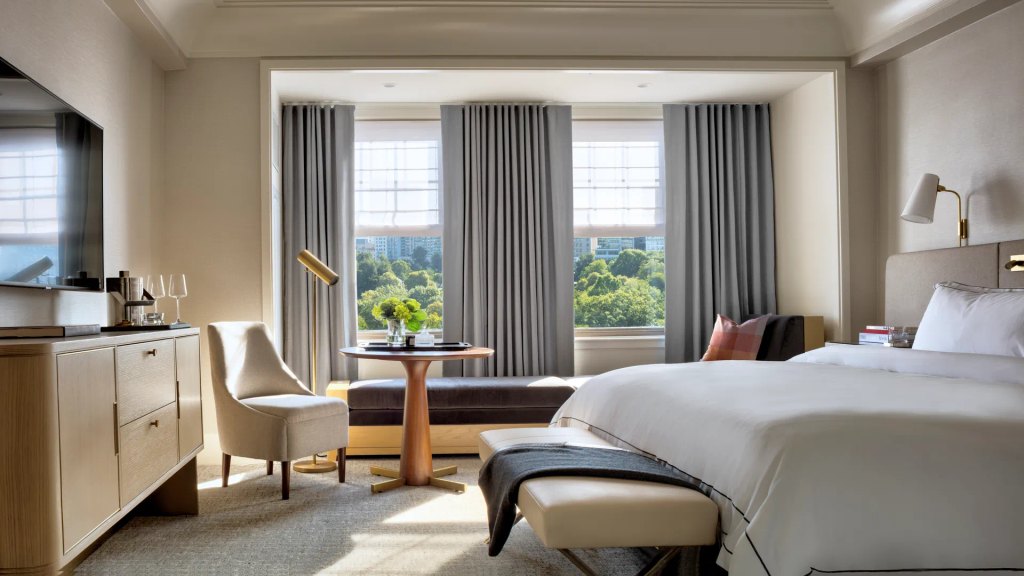
The interiors prioritize calmness and functionality. Comfortable furnishings, quality linens, and carefully considered layouts create an environment that feels suited to extended stays as well as short city visits. Rather than overwhelming guests with decorative statements, the design allows the quality of the materials and the surrounding views to establish the mood.
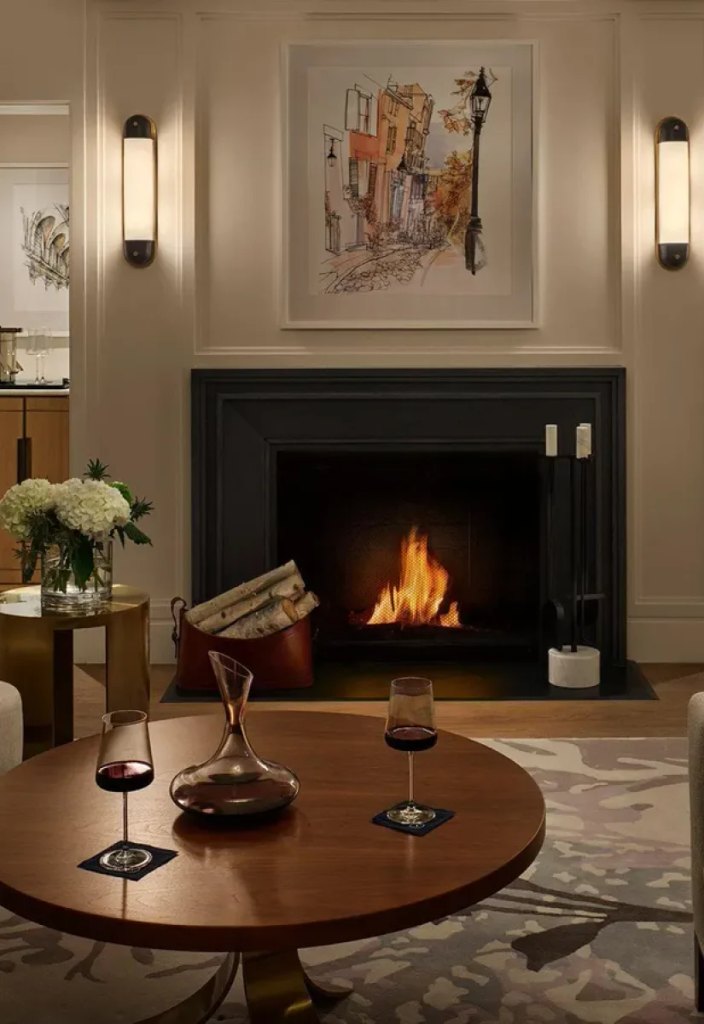
Certain suites feature wood-burning fireplaces, introducing a particularly appealing element of domestic warmth. In a city known for its cold winters, the fireplace offers both practical comfort and a strong emotional association with traditional New England interiors.
Bathrooms further reinforce the emphasis on indulgence. Selected suites feature marble surfaces, double sinks, separate showers, and soaking tubs, while plush Frette linens and robes contribute to a hotel experience centered on personal comfort.
The distinction between park-facing and city-facing rooms is also significant. Views across the Public Garden provide a softer, greener perspective, while urban-facing accommodations emphasize Boston’s architectural landscape. In both cases, the window becomes an important design element, connecting the private interior with the life of the city.
At the top of the hotel, Contessa introduces a more theatrical expression of contemporary luxury. Occupying the seventeenth floor, the rooftop restaurant combines Northern Italian cuisine with panoramic views of the surrounding city and park.
Its elevated position gives the dining experience a distinctive spatial quality. The restaurant offers a sense of escape from the busy streets below while maintaining a strong connection to Boston’s urban landscape.
The interiors are designed to support a lively, sophisticated atmosphere, making the restaurant a destination in its own right rather than simply an amenity for hotel guests. Seasonal dishes, handmade pastas, seafood, and carefully prepared desserts complement the setting, while the bar provides a more informal alternative to full-service dining.
Together with Street Bar, Contessa establishes a contrast between two social environments: the intimate, art-filled atmosphere of the ground floor and the elevated energy of the rooftop.
The Newbury Boston’s design cannot be understood independently of its location. Newbury Street, known for its boutiques, galleries, cafés, and historic row houses, contributes to the hotel’s sophisticated yet approachable character. Nearby Commonwealth Avenue Mall, Boston Common, Beacon Hill, and the Freedom Trail offer additional layers of architectural and cultural interest.
This proximity encourages guests to experience the hotel as part of the city rather than as an isolated luxury destination. The Public Garden provides an immediate connection to nature, while the surrounding streets reveal Boston’s architectural heritage and contemporary lifestyle.
The Newbury Boston demonstrates how a historic building can be reimagined for contemporary hospitality without losing its original significance. Its architectural heritage, residentially inspired interiors, curated artwork, and carefully differentiated social spaces create a coherent design experience.
Ultimately, the hotel’s appeal lies in its ability to combine grandeur with intimacy. Rather than relying exclusively on spectacle, it offers a more personal form of luxury shaped by history, craftsmanship, art, and location. The result is a sophisticated urban retreat that reflects the enduring character of Boston while embracing a distinctly modern approach to hospitality.


