
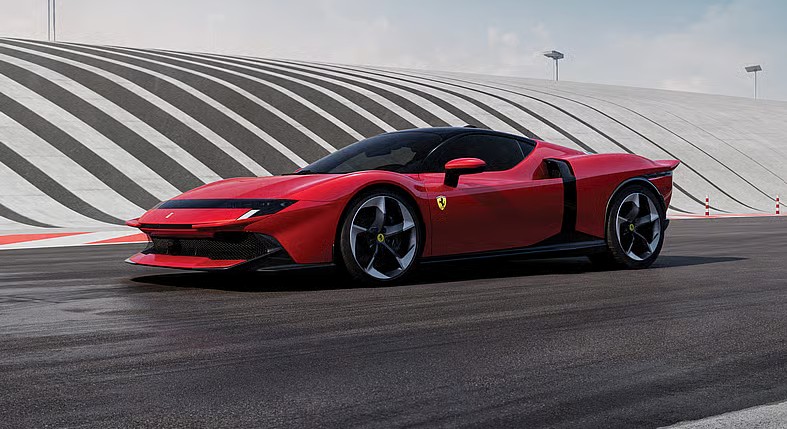
Few names in automotive history carry the cultural weight of Testarossa. For an entire generation, Ferrari’s legendary badge became synonymous with excess, speed, Italian glamour, and the fantasy of the ultimate supercar. But the name’s origins reach far beyond the wide-bodied icon of the 1980s. More than six decades after Ferrari first painted its cylinder heads red, the Testarossa name has returned on one of Maranello’s most technologically advanced machines yet: the 849 Testarossa.
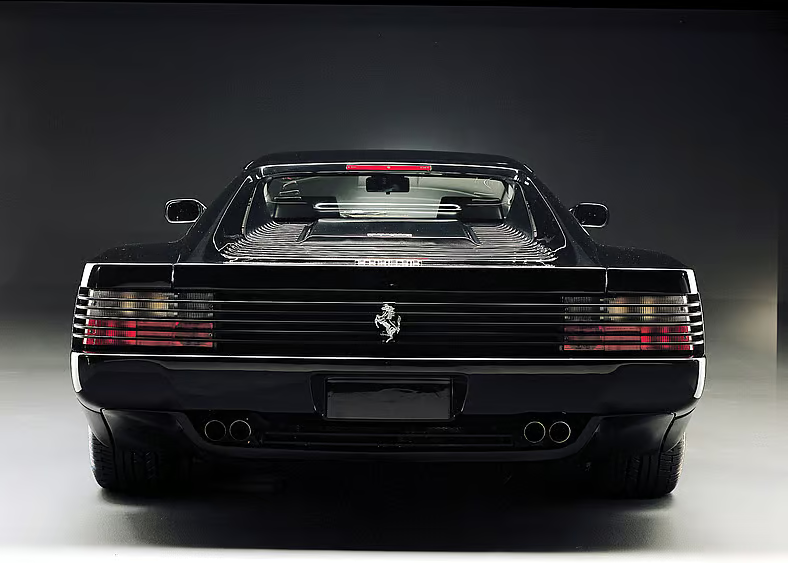
For many children of the 1980s, the original Testarossa occupied the same mythical territory as Lamborghini’s Countach. Its dramatic proportions, enormous side intakes and unmistakable strakes made it an instant bedroom-poster legend. Then came Miami Vice. When Sonny Crockett abandoned his Daytona for a white Testarossa, the Ferrari became inseparable from the visual language of the era.
Yet the road to that cultural phenomenon began decades earlier, on the racetracks of Europe.
The First “Red Head”
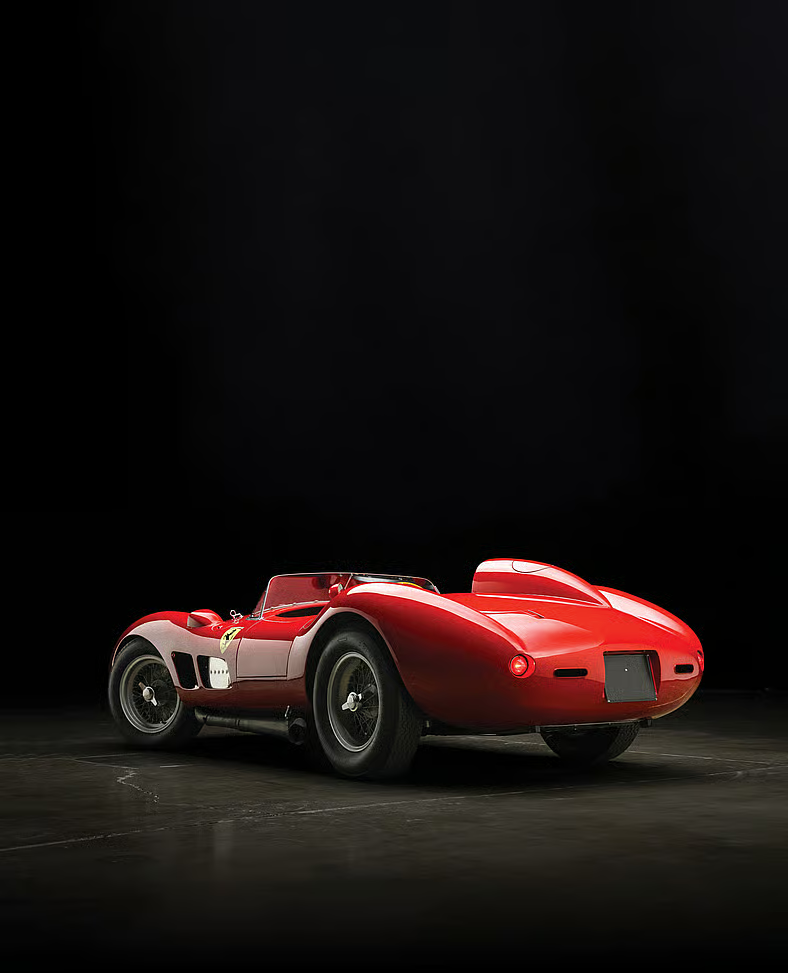
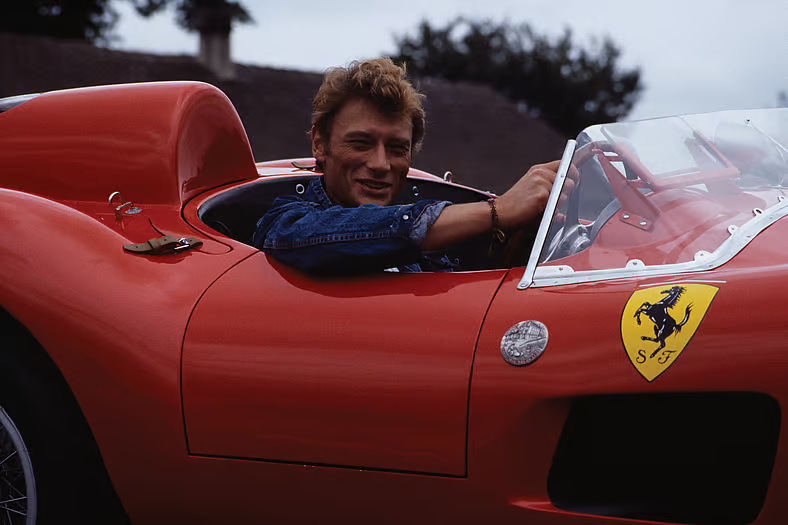
The original Testa Rossa appeared in 1956 with the Ferrari 500 TR. At the time, Ferrari needed a lighter and more competitive sports racer capable of challenging machines from Maserati and Jaguar. Engineer Vittorio Jano developed the 500 TR as an evolution of the 500 Mondial, and one visual detail gave the car its unforgettable name: its cylinder heads were painted bright red.
“Testa Rossa” translates literally to “red head.”
The four-cylinder racer was successful enough to establish the name, but Ferrari had something considerably more potent waiting in the wings. With new engine regulations approaching for 1958, the company installed Colombo’s legendary V12 into the Testa Rossa platform, creating the 250 Testa Rossa.
That car transformed the badge into motorsport royalty.
The 250 TR became one of the defining Ferrari competition cars of its era, winning major races including Le Mans, Sebring and the Targa Florio. Its distinctive pontoon-fender bodywork, created by Scaglietti, remains one of the most recognizable silhouettes ever produced.
Only a handful survive today, helping make the 250 TR one of the world’s most valuable automobiles. A 1957 prototype sold for more than $16 million at Pebble Beach in 2011, while another example reportedly changed hands privately for nearly $40 million.
The lineage culminated with the 250 TRI/61, which combined a lighter structure with independent rear suspension influenced by Ferrari’s Formula 1 technology. Phil Hill and Olivier Gendebien drove one to victory at Le Mans in 1961.
Then Ferrari moved on.
Enter the 1980s Icon
More than two decades later, the Testarossa name returned in a radically different form.
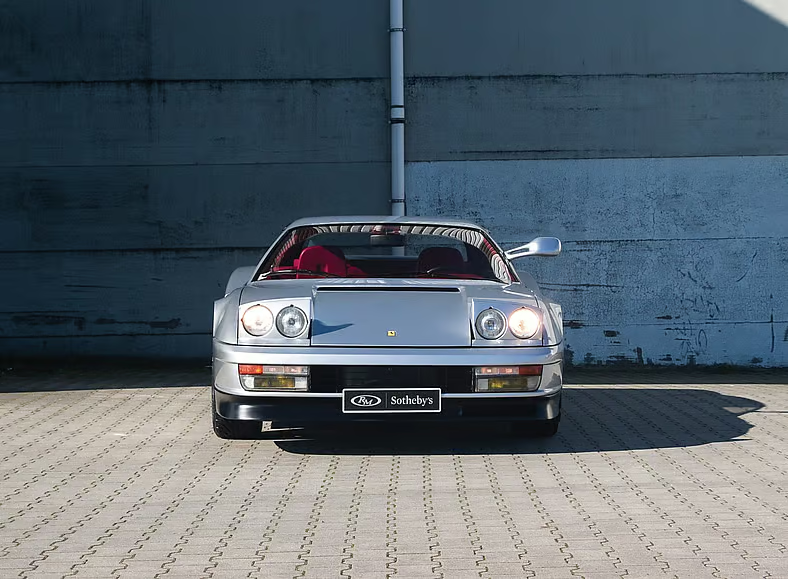
Introduced at the 1984 Paris Motor Show, the 512 Testarossa was designed to combine the performance of a mid-engine supercar with the comfort and practicality of a grand tourer. Its 4.9-liter flat-12 sat longitudinally behind the cabin and sent power to the rear wheels through a five-speed manual gearbox.
The famous side strakes, meanwhile, were born from engineering necessity. Ferrari relocated the radiators from the front of the car to the sides, creating enormous air intakes behind the doors. Pininfarina’s solution transformed those openings into one of the most recognizable styling signatures in automotive history.
The result was a car that could deliver genuine supercar performance without sacrificing long-distance usability.
Early examples included the highly collectible Monospecchio cars, identifiable by their single high-mounted driver’s-side mirror. Ferrari later switched to conventional twin mirrors, making those early cars particularly desirable among collectors.
The family evolved into the 512 TR in 1991, gaining more power and improved weight distribution. In 1994 came the F512 M, the final evolution, with fixed headlights, round taillights and further mechanical upgrades. With only 501 examples produced, it remains the rarest version of the modern Testarossa family.
But the badge’s cultural impact had already been secured.
From Miami to Maranello’s Future
The Testarossa became more than a Ferrari. It became a cultural symbol.
Its appearance in Miami Vice transformed the car into an icon of 1980s television, while appearances in video games such as Out Run introduced it to millions who would never have encountered one on the road. For an entire generation, the Testarossa represented what a Ferrari was supposed to look like.
Now, Ferrari has brought the name into the hybrid era.
The 849 Testarossa replaces the SF90 Stradale with a combination of an extensively reworked twin-turbo V8 and three electric motors. The combustion engine produces 819 horsepower, while total system output reaches an extraordinary 1,036 horsepower.
The numbers are staggering. Ferrari claims a 0-to-62-mph sprint of just 2.3 seconds, a top speed exceeding 200 mph and a Fiorano lap time approximately 1.5 seconds quicker than the SF90 it replaces.
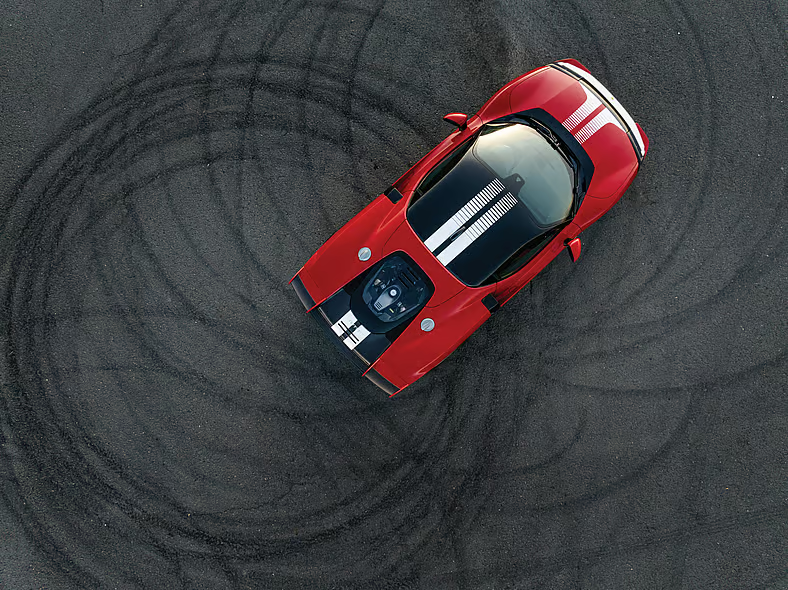
Yet the significance of the 849 Testarossa isn’t simply its performance. Ferrari is deliberately connecting its newest technology flagship with one of the most recognizable names in its history.
Even the nomenclature follows a familiar formula: 849 references the eight-cylinder engine and its 49 cc-per-cylinder displacement, while Testarossa ties the car to a lineage that stretches from 1950s racing prototypes to an 1980s cultural phenomenon.
The styling follows the same philosophy. The 849’s sharp front end recalls Ferrari’s contemporary design language, while its rear treatment draws inspiration from the company’s endurance-racing machines of the 1970s.
Whether the new car can generate the same cultural electricity as its predecessor is impossible to know. The original Testarossa arrived at precisely the right moment, becoming a symbol of an entire decade.
But Ferrari clearly understands what the badge represents.
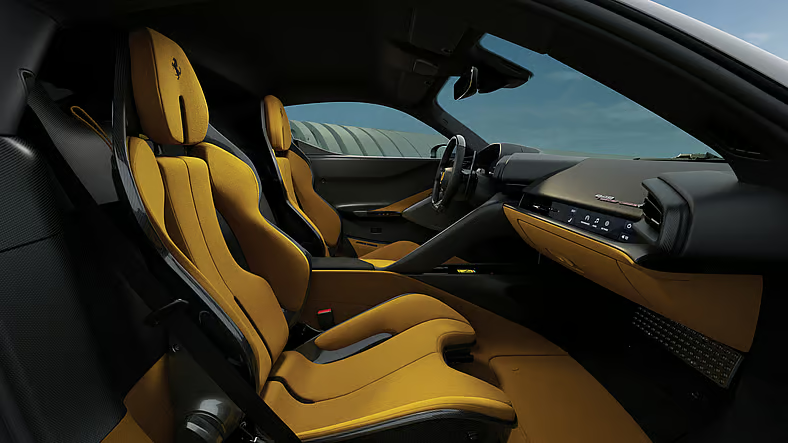
The first Testa Rossa earned its name from red-painted cylinder heads. The 250 TR turned it into a racing legend. The 512 Testarossa transformed it into a global pop-culture icon.
Now, with more than 1,000 horsepower and three electric motors, the 849 Testarossa is writing the next chapter.
The red head has officially entered the electric age.


