
In 2026, celebrities are no longer simply endorsing products. They are building worlds.

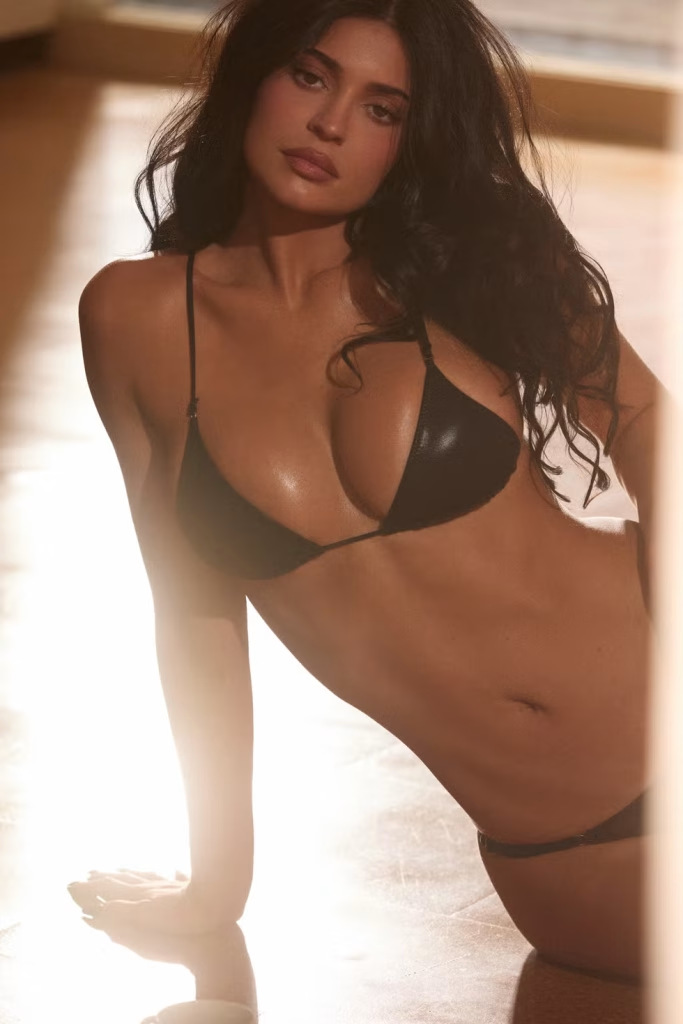
The latest example comes from Kylie Jenner and Francesca Aiello, founder of Frankies Bikinis, whose second collaborative release under Jenner’s KHY label arrives with a fitting name: Fever Dream. While technically a swimwear collection, the project is less about bikinis and more about the modern business of aspiration, storytelling, and lifestyle branding.
Consumers today are not merely buying clothing, watches, sneakers, or fragrances. They are buying access—real or imagined—to a specific way of life. Few understand this better than Jenner, whose influence has evolved from reality television fame into a sophisticated personal brand worth hundreds of millions of dollars.
The Fever Dream campaign does not market products as much as it markets a mood.
That mood is unmistakably Los Angeles.
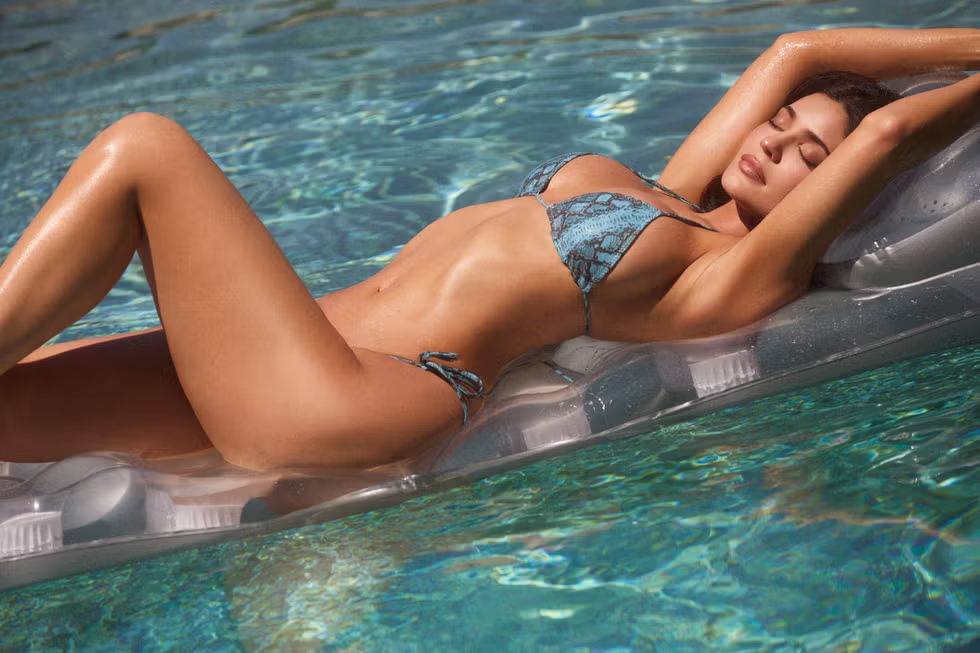
From the beaches of Malibu to the winding roads of the Hollywood Hills, Southern California has long exported an image of effortless luxury to the rest of the world. It is sunshine, convertibles, hidden pools, canyon drives, palm trees, and exclusive parties behind unmarked doors. Whether that version of Los Angeles actually exists is almost irrelevant. The myth has become more powerful than reality itself.
Jenner and Aiello understand that mythology perfectly.
According to both entrepreneurs, the project was inspired by their own experiences growing up in Los Angeles and by pieces from their personal wardrobes that reflected the city’s history and character. Rather than presenting the collaboration as a straightforward product launch, the campaign positions itself as a tribute to a place and a lifestyle.
That distinction matters.
Luxury marketing in 2026 increasingly revolves around emotional association rather than technical features or craftsmanship alone. Consumers are flooded with options across every category imaginable. Standing out requires more than quality—it requires narrative.
Apple sells creativity.
Porsche sells driving passion.
Rolex sells achievement.
And increasingly, celebrity-founded brands sell identity.
KHY is not asking consumers whether they need another swimsuit. It is asking whether they want to participate in a particular version of California living.
The campaign imagery reinforces this strategy at every turn.
Shot in a mid-century home overlooking the Hollywood Hills, the accompanying film follows Jenner through what appears to be an ordinary morning that slowly unfolds into an idealized day in Los Angeles. The visual style deliberately creates the feeling that viewers are observing private moments from a distance, as if peering through windows or catching reflections in mirrors.
It feels cinematic.
It feels exclusive.
Most importantly, it feels authentic—even if every frame has been carefully constructed to appear that way.
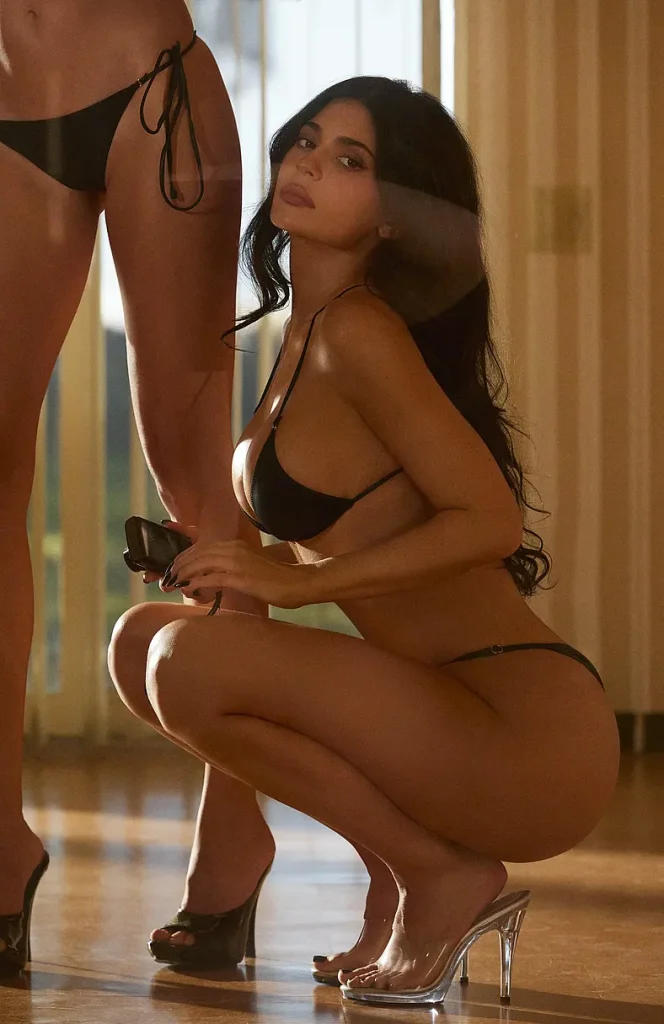
Fever Dream by Frankies Bikinis x KHY.
Authenticity has become one of the most valuable currencies in modern marketing. Audiences are increasingly skeptical of polished advertisements and corporate messaging, yet they remain highly receptive to content that feels personal and unfiltered.
The irony, of course, is that authenticity itself has become a carefully engineered product.
Few public figures navigate this balance better than Jenner. For over a decade, she has mastered the art of presenting highly curated moments as spontaneous glimpses into her private life. Social media transformed celebrities into brands, and Jenner was among the first generation to fully understand how powerful that transformation could become.
The result is influence that extends far beyond traditional entertainment.
When celebrities launched fashion lines in previous decades, those ventures were often dismissed as side projects or licensing deals. Today, celebrity businesses are legitimate commercial powerhouses with global reach and highly engaged audiences.
The numbers support it.
Consumers increasingly place their trust in creators, influencers, and personalities over traditional institutions or advertising campaigns. Younger demographics in particular view brands as extensions of identity and community rather than simple transactions.
That shift explains why collaborations like Fever Dream generate attention far beyond their respective industries.
This is not simply a swimwear launch.
It is a case study in modern brand building.
For Frankies Bikinis founder Francesca Aiello, partnering with Jenner also demonstrates how founder-led brands are evolving. Rather than positioning themselves as distant executives, entrepreneurs increasingly place themselves at the center of the product story. Founders are becoming personalities, personalities are becoming media platforms, and media platforms are becoming retail businesses.
The lines separating entertainment, commerce, and culture continue to disappear.
For men watching these developments from the worlds of business, entrepreneurship, and marketing, there are lessons everywhere.
Products matter.
Execution matters.
But narrative may matter most of all.

The companies winning in 2026 are rarely those with the best products alone. They are the companies capable of creating emotional connection and cultural relevance. They build communities rather than customer lists and experiences rather than transactions.
The Los Angeles fantasy has been sold for generations by Hollywood studios, musicians, and luxury brands.
Now it is being sold by entrepreneurs with smartphones, social platforms, and direct-to-consumer businesses.
Kylie Jenner and Francesca Aiello’s latest collaboration may come packaged as a swimwear collection, but the real product is something much larger.
They are selling sunshine.
They are selling nostalgia.
They are selling exclusivity.
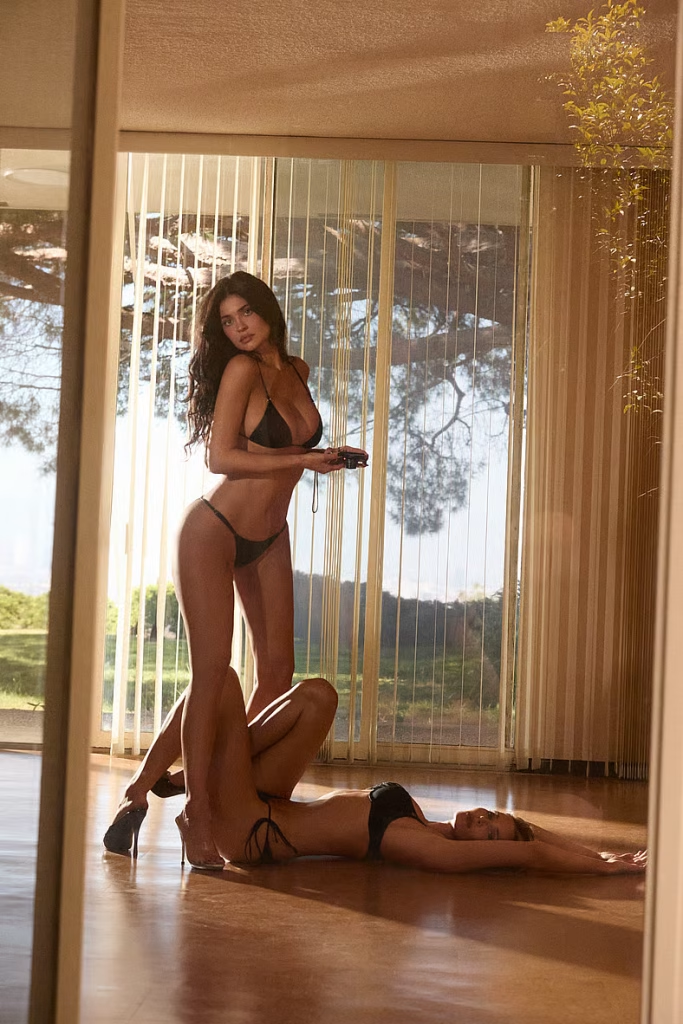
Most of all, they are selling the idea that somewhere in the hills above Los Angeles, life really can look like a fever dream.


